
Roofing in the United States: An Overview
A roof is the most critical weatherproofing system on any home. In the US, roofing needs vary dramatically by region — from hurricane zones to hail alleys to desert heat.
YoHomeFix connects homeowners with licensed, insured roofers across 19,000+ cities in all 50 states. From emergency tarping to full replacement and new construction, our network provides upfront quotes, documented inspections, and code-compliant installation.

Why Homeowners Choose YoHomeFix
Every roofer in our network is licensed, insured, and experienced with local roofing issues.
Local Experts
Roofers who understand your local climate, codes, and common roofing issues.
Fast Response
Emergency service available 24/7, with most calls answered within minutes.
Upfront Pricing
Written, itemized quotes before any work begins. No hidden fees.
Insurance Help
Roofers who can meet adjusters and document storm damage for claims.
Roofing Service Categories
Full residential and commercial roofing services. Each service page covers scope, timing, warning signs, cost factors, and FAQs.

Emergency Roof Replacement
Emergency roof replacement for homes with active leaks, storm damage, or structural failure requiring immediate re-roofing

Roof Replacement
Complete roof replacement and re-roofing for aging or damaged roofs

Roof Replacement
Complete roof replacement and tear-off for aging or severely damaged roofs

Roof Installation
New roof installation for homes, additions, and new construction
New Construction Roofing
Roofing for new builds, from framing and dry-in to final shingle, tile, or metal installation
Roof Inspection
Comprehensive roof inspection for buyers, sellers, insurance, and seasonal maintenance

Roof Leak Assessment & Replacement
Professional assessment and roof replacement for homes with active leaks, ceiling stains, and water intrusion

Storm Damage Roof Replacement
Hail, wind, and storm damage roof replacement with insurance documentation
Shingle Roof Replacement
Asphalt shingle roof replacement for missing, cracked, or curled shingles requiring full re-roofing

Flat Roof Replacement
Flat roof replacement for TPO, EPDM, modified bitumen, and built-up roofing systems

Roof Maintenance
Preventive roof maintenance to extend roof life and plan for timely replacement

Residential Roofing
Residential roofing installation and replacement for homes including new construction and re-roofing
Commercial Roofing
Commercial roofing for offices, retail, warehouses, and multi-family buildings

Emergency Roofing Services
Emergency roofing services including tarping, temporary protection, and storm response leading to replacement
Roof Vent Replacement
Roof vent, exhaust vent, and attic ventilation replacement during re-roofing

Skylight Replacement
Skylight replacement during re-roofing for leaks, cracked glass, and flashing failure
How It Works
Call our dispatch line — we connect you with a licensed local roofer for inspection, quote, and scheduling.
Call
Describe your roofing issue — leaks, missing shingles, storm damage, or an aging roof.
Inspect
A local roofer visits your property, examines the roof and attic, and documents findings with photos.
Quote
Receive a written, itemized quote with materials, labor, cleanup, warranty, and timeline.
Schedule
Repairs often same-day. Replacements and new construction scheduled around weather.
Complete
The crew cleans debris, runs a quality check, and walks the property with you.
The Roofing Process Explained
Every roofing project follows a structured process — from small repair to full replacement. Here's what to expect:
- Inspection: The roofer examines the roof surface, attic, and interior for active leaks, damage, and ventilation issues.
- Quote: Based on the inspection, the roofer explains repair or replacement options and provides a written, itemized quote.
- Scheduling: Work is scheduled around weather conditions. Materials are ordered based on the selected product and local availability.
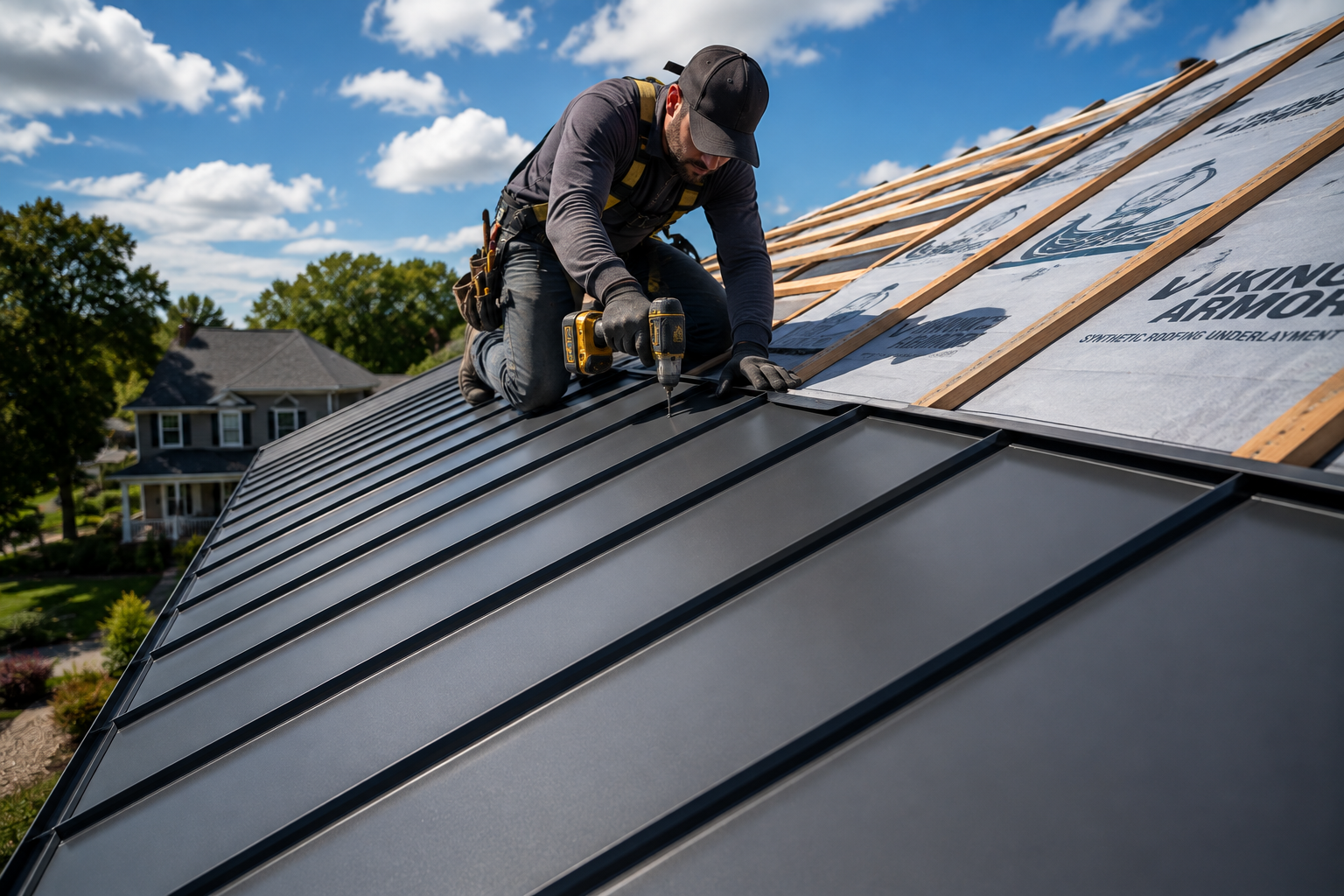
- Installation: For repairs, damaged materials are removed and replaced. For replacements, the old roof is torn off, decking is inspected, underlayment and flashing are installed, and the new roofing material is applied.
- Final Inspection: The crew cleans up all debris, runs a final quality check, and walks the property with the homeowner.

Roofing Materials Guide
The right material depends on climate, budget, architecture, and ownership timeline. Here are the most common options:
Asphalt Shingles — The most widely used roofing material in the US, covering approximately 75% of homes. Affordable, available in many colors, and compatible with most roof slopes.
Metal Roofing — Durable, energy-efficient, and 40–70 year lifespan. Performs well in high-wind and high-sun areas. Upfront cost is higher but long-term value is strong.
Tile Roofing — Concrete and clay tile roofs last 50–100 years and are common on Mediterranean, Spanish, and Southwestern-style homes. Heavy and requires structural evaluation.
Slate Roofing — Premium natural stone that can last 75–150 years. Fireproof and sustainable, but among the most expensive roofing materials.
Flat Membranes — TPO, EPDM, and modified bitumen are used on flat and low-slope roofs, common on commercial buildings and modern residential designs.
Repair vs. Replacement: Making the Right Choice
Under 15 years with isolated damage? Repair is usually cost-effective. Over 20 years with widespread damage? Replacement is typically more economical long-term.
| Factor | Repair | Full Replacement |
|---|---|---|
| Cost | Lower cost, short-term fix | Higher cost, long-term investment |
| Best When | Roof is under 15 years old, isolated damage | Roof is 20+ years old, widespread damage |
| Lifespan Added | 2–5 years typically | 20–50 years depending on material |
| Insurance Impact | May not affect premiums | New roof may lower premiums |
| Timeline | 1–2 days | 2–5 days depending on size |
Insurance Claims for Roof Damage
Most policies cover sudden damage from wind, hail, and falling objects — not gradual wear or deferred maintenance. Understanding the claims process can mean the difference between a covered repair and an out-of-pocket expense.
Insurance Claim Checklist
Follow these steps to maximize your chances of a successful claim:
- Document damage with clear photos, dates, and local weather reports from the storm date
- Request a written roofer inspection before filing — the report supports your claim
- Review your deductible amount and whether actual cash value or replacement cost coverage applies
- Use a roofer who can meet the insurance adjuster at your property for the inspection
- Keep records of past repairs, roof age, and any prior inspections
- Avoid contractors who offer to waive your deductible or demand full payment upfront
New Construction Roofing
Coordination between builder, framer, and roofer is essential. Material selection, ventilation, and flashing must be planned during framing — not added as an afterthought.
New Construction Roofing Steps
- Choose materials suited to local climate and wind exposure
- Install underlayment and flashing before the final roof layer
- Coordinate dry-in with the builder before wet weather
- Schedule final inspection and warranty paperwork at completion
- Plan ventilation, gutters, and drainage as one integrated system
- Verify roof structure is engineered to support the selected material weight
Roof Maintenance Guide
Annual maintenance is the most cost-effective way to extend roof life. A maintained roof can outlast an unmaintained one by 5–10 years.
Roof Maintenance Checklist
- Clean gutters and downspouts in spring and fall to prevent water backup
- Remove leaves and branches from valleys and the roof surface
- Inspect flashing around chimneys, vents, and skylights for gaps or corrosion
- Check the attic for moisture stains, mold, or daylight entering through the roof deck
- Schedule a professional roof inspection every 2–3 years, or annually if your roof is over 15 years old
- After any hail or high-wind event, schedule a post-storm inspection even if damage is not visible from the ground
Connect with a licensed roofing contractor
Licensed roofers available 24/7 in 19,000+ US cities.
Roofing Service Comparison
Different needs call for different services. Here's how the most common roofing services compare:
| Service | Best For | Timeline |
|---|---|---|
| Emergency Response | Active leaks, storm damage | Same day |
| Roof Replacement | Aging or damaged roofs | 1–3 days |
| Roof Installation | Old or widespread damage | 1–3 days |
| New Construction Roofing | New builds, additions | 3–7 days |
| Roof Inspection | Buying, selling, maintenance | 1–2 hours |
| Annual Maintenance | Preventive care | 1–2 hours |
Roofing Do's Every Homeowner Should Follow
- Inspect the roof twice a year and after every major storm
- Keep gutters, valleys, and downspouts free of debris
- Trim tree branches that hang within 6 feet of the roof surface
- Check attic ventilation and insulation seasonally
- Fix small leaks immediately — water travels and can damage areas far from the entry point
- Hire a licensed, insured roofer for any work that requires walking on the roof
Roofing Don'ts That Cost You Money
- Ignore missing, curled, or bruised shingles — even a small gap can let water reach the decking
- Walk on a wet or steep roof without fall protection
- Power wash shingles or tiles — high pressure strips granules and cracks tile
- Cover a ceiling stain with paint instead of fixing the source
- Wait to call a roofer after hail or high-wind events — insurance claims are time-sensitive
- Hire a contractor who cannot show a current license, insurance, or local references
Frequently Asked Questions
How do I know if I need a roof repair or replacement?
If your roof is under 15 years old with isolated damage, repair is usually the right call. If it is over 20 years old, has widespread granule loss, or has needed three or more repairs in five years, replacement is typically more economical. A licensed roofer can assess the condition and recommend the best option.
Does homeowners insurance cover roof damage?
Most policies cover sudden and accidental damage from wind, hail, and falling objects — but not gradual wear and tear or damage from deferred maintenance. Document damage with photos and a professional inspection, and file your claim promptly.
How long does a roof replacement take?
Most residential roof replacements take 1–3 days depending on roof size, material, and weather. Larger or more complex roofs may take longer. Your written quote will include a specific timeline.
What is the best roofing material for my climate?
The right material depends on your local climate, budget, and architectural style. Asphalt shingles work well in most climates. Metal excels in high-wind and high-sun areas. Tile and slate are ideal for warm, dry regions. Flat membranes are used on low-slope roofs. A local roofer can recommend the best option for your area.
Do you offer new construction roofing?
Yes. We connect builders and homeowners with licensed roofers who handle new construction roofing from framing inspection and dry-in through final shingle, metal, tile, or flat membrane installation. Coordination with the builder's schedule and weather timing is critical.
Serving 19,000+ Cities Across the USA
From major metro areas to small towns, we connect homeowners with licensed roofers in all 50 states. Enter your city or ZIP to find local roofing services near you.
Roofing Guides & Resources
In-depth homeowner guides to help you make informed roofing decisions.
Featured States
Select your state for climate-specific roofing information and city-level service pages.
Featured Cities
Roofing services in major metro areas. Select your city for local roofing help.